Designing employee benefits for a multi-generational workforce has become one of the biggest challenges for modern organizations.
As businesses grow and teams expand, managing HR processes becomes increasingly complex. One of the most challenging aspects is designing employee benefits programs that meet the diverse needs of a modern workforce.
Today’s organizations often employ individuals from multiple generations, each with unique priorities, life stages, and financial goals.
What appeals to a recent graduate entering the workforce may look very different from the benefits valued by mid-career professionals or employees approaching retirement.
For employers, the challenge is finding the right balance between flexibility, affordability, and meaningful support.
Creating a benefits structure that acknowledges these differences not only improves employee satisfaction but also helps build a workplace culture where individuals feel valued, supported, and motivated to contribute.
Below are several key areas companies should focus on when designing benefits programs that work for employees across different generations.
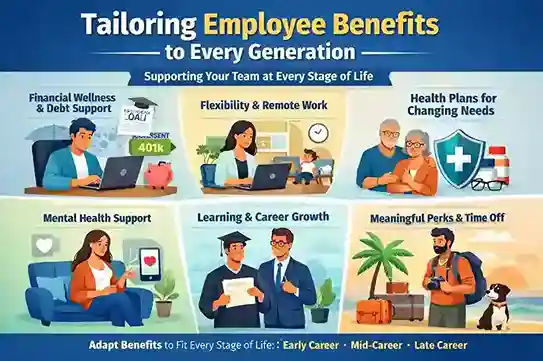
Financial Wellness and Debt Support
Many early-career professionals enter the workforce carrying significant student loan debt. This financial burden can create stress and make it difficult for younger employees to focus on long-term career goals.
Employers can make a meaningful difference by offering programs that support financial wellness, such as:
-
Student loan repayment assistance
-
Access to 401(k) retirement savings plans
-
Financial education programs
-
One-on-one sessions with financial coaches
Providing these types of resources helps employees gain control over their finances, reduce anxiety, and focus more effectively on their work. When individuals feel financially secure, they are often more engaged, productive, and committed to their organization.
Flexibility and Remote Work Autonomy
For mid-career professionals, life responsibilities often extend beyond the workplace. Many are balancing demanding careers while raising children or caring for aging parents.
For these employees, flexibility can be one of the most valuable benefits a company offers.
Flexible benefits may include:
-
Hybrid work arrangements
-
Flexible scheduling
-
Personalized benefits packages
Some companies also explore options such as Section 125 cafeteria plans, which allow employees to choose benefits that better match their individual needs while reducing pre-tax expenses.
Offering flexibility allows employees to maintain a healthier balance between professional and personal responsibilities, which often results in greater job satisfaction and retention.
Health Plans That Fit Changing Needs
As employees progress through different stages of life, their healthcare priorities evolve. Older employees may prioritize comprehensive coverage that includes:
-
Lower deductibles
-
Prescription medication coverage
-
Dental and vision care
-
Preventive health services
These benefits are especially important for individuals approaching retirement age who may need healthcare solutions that bridge the gap between employment and Medicare eligibility.
Employers should also ensure employees understand options such as COBRA coverage, which allows individuals to maintain health insurance during employment transitions. Clear communication around these benefits reinforces a company’s commitment to the long-term well-being of its workforce.
Mental Health and Professional Support
Modern workplaces increasingly recognize that mental health is a critical component of employee well-being.
Supporting mental health means creating a culture where employees feel comfortable addressing stress, burnout, and personal challenges. Companies can demonstrate this commitment by providing:
-
Mental health days
-
Access to therapy or counseling apps
-
Employee Assistance Programs (EAPs)
-
Stress management resources
When employees know their organization supports their mental and emotional health, they are more likely to feel valued and empowered. This contributes to a healthier workplace culture and more resilient teams.
Continuous Learning and Career Development
Professional growth opportunities are another essential benefit that resonates across generations.
Organizations that invest in employee development programs demonstrate that they care about the future success of their workforce.
Common learning benefits include:
-
Tuition reimbursement programs
-
Professional certification stipends
-
Skills training workshops
-
Internal mentorship programs
Mentorship initiatives are particularly powerful because they help bridge generational knowledge gaps within organizations. Experienced professionals can share insights while younger employees bring fresh perspectives and new ideas.
When companies promote continuous learning, they build teams that grow together and remain engaged over the long term.
Meaningful Perks That Reflect Real Life
Beyond traditional benefits, many organizations now offer lifestyle-oriented perks that better reflect how employees live.
Examples include:
-
Sabbatical programs for long-tenured employees
-
Volunteer time off for community service
-
Travel insurance options
-
Pet insurance coverage
-
Expanded paid time off policies
While these benefits may seem small individually, they send an important message: employees are valued as individuals, not just as workers.
Providing benefits that recognize diverse lifestyles helps foster a more inclusive and supportive workplace culture.
Choose the Right Benefits for Your Workforce
The most effective benefits programs move beyond one-size-fits-all offerings. Instead, they provide flexibility and personalization, allowing employees to select benefits that align with their stage of life and personal priorities.
By supporting employees through different phases – from managing student debt to preparing for retirement – organizations demonstrate that they genuinely care about the well-being of their teams.
Ultimately, companies that invest in thoughtful and inclusive benefits programs are more likely to attract top talent, retain experienced professionals, and build a workplace culture where employees thrive.
Frequently Asked Questions
What are multi-generational employee benefits?
Multi-generational employee benefits are workplace benefits designed to support employees at different life stages, from early-career professionals to mid-career employees and those approaching retirement.
Why are employee benefits different for each generation?
Employee benefits often vary in importance across generations because individuals at different life stages have different priorities.
Early-career employees may value financial wellness and student loan support, while mid-career professionals often prioritize flexible work arrangements. Employees nearing retirement may focus more on healthcare coverage and retirement planning.
What are examples of multi-generational employee benefits?
Examples of multi-generational employee benefits include student loan repayment assistance, flexible work arrangements, comprehensive health insurance plans, mental health support programs, retirement savings plans, and professional development opportunities.
These benefits help organizations address the diverse needs of employees at various life stages.
Why should companies offer multi-generational benefits programs?
Companies that offer multi-generational benefits programs are better able to attract and retain talent across different age groups.
By supporting employees’ financial, health, and career needs throughout their professional journey, organizations create a more inclusive workplace culture and improve overall employee satisfaction and productivity.
Why are flexible benefits important?
Flexible benefits are important because they allow employees to choose programs that match their personal needs and life stages, improving overall job satisfaction, engagement, and employee retention.
How do employee benefits improve retention and workplace satisfaction?
Well-designed employee benefits programs help employees feel valued and supported. When companies provide benefits that address financial wellness, health needs, work-life balance, and career development, employees are more likely to remain engaged and stay with the organization longer.
How do financial wellness programs help employees?
Financial wellness programs help employees manage debt, plan for retirement, and improve their overall financial stability. By reducing financial stress, these programs can increase employee productivity, focus, and engagement at work.
What are 401(k) retirement savings plans?
A 401(k) retirement savings plan is a retirement savings plan commonly offered by employers in the United States. It is a U.S. employer-sponsored retirement program that allows employees to save and invest a portion of their salary for retirement with tax advantages.
The plan is named after Section 401(k) of the U.S. Internal Revenue Code, which defines how these tax-deferred retirement savings accounts operate.
What is a Cafeteria Plan (Section 125 Employee Benefits)?
A Cafeteria Plan is a flexible employee benefits plan that allows employees to choose from a menu of benefit options, similar to selecting items in a cafeteria.
Instead of providing the same fixed benefits package to every employee, employers give workers the flexibility to select benefits that best suit their personal needs. The term comes from Section 125 of the U.S. Internal Revenue Code, which is why it is also known as a Section 125 Plan.
What is an Employee Assistance Program (EAP)?
An Employee Assistance Program (EAP) is a workplace benefit that provides employees with confidential support for personal, emotional, or work-related issues that may affect their job performance, health, or overall well-being.
Employers typically offer EAP services free of charge through professional counselors or specialists who can help employees address challenges such as stress, mental health concerns, financial difficulties, or family issues.
What is COBRA (Health Insurance Continuation)?
COBRA stands for the Consolidated Omnibus Budget Reconciliation Act, a U.S. federal law that allows employees and their families to continue their employer-sponsored health insurance for a limited period after leaving a job or experiencing certain qualifying life events.
The law, enacted in 1985, helps prevent individuals from suddenly losing health coverage during transitions such as job loss, reduced working hours, or other major life changes.
Author
Frank Mengert is known for identifying opportunities where others see challenges. As the Founder and CEO of ebm, a leading provider of employee benefits solutions, Frank has built the company by bridging the gap between insurance expertise and technology-driven solutions for brokers, consultants, carriers, and employers across the United States. His LinkedIn profile.